Choosing the right Pcb Printed Circuit Boards is crucial for the success of your project. These boards serve as the backbone for most electronic devices. They connect various components and facilitate communication. The market offers a variety of options, which can be overwhelming.
When selecting Pcb Printed Circuit Boards, consider your project's specific requirements. Different projects may need different materials and designs. Pricing can also vary greatly based on these factors. It's important to think about longevity and reliability. A less expensive board might save initial costs but could fail later.
Don’t forget, the manufacturing process can affect performance. Board size, layer count, and thickness must align with your needs. Sometimes, choosing a well-known supplier offers peace of mind. But this doesn’t always guarantee superior quality. Reflect on your choices and their long-term impact.
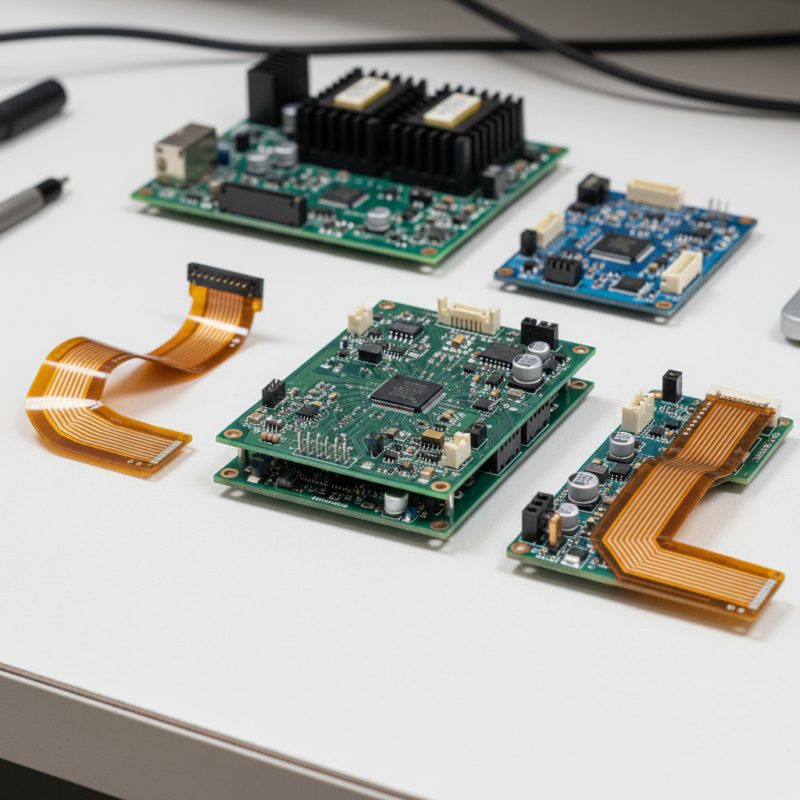
Understanding printed circuit boards (PCBs) is essential for any electronics project. At their core, PCBs consist of a flat sheet of insulating material. This material typically has conductive pathways etched into its surface. These pathways connect various electronic components, allowing signals to flow seamlessly. The design and layout of these pathways greatly affect the performance of the circuit.
When creating a PCB, it's crucial to consider factors such as size, layer count, and material type. A simple circuit might only require a single layer. However, more complex designs may need multiple layers to fit all components. Using the right material can also impact the board's durability and conductivity. Mistakes in choosing the wrong specifications can lead to malfunction or inefficiency.
It's important to review your PCB design multiple times. Overlooking small details can lead to significant issues later. For example, incorrect spacing between traces can cause short circuits. Similarly, failing to account for heat dissipation can result in overheating. Proper research and testing are essential in avoiding these common pitfalls.
Choosing the right printed circuit board (PCB) can make or break an electronics project. Several key factors influence PCB selection, including material, thickness, and manufacturing processes. A recent industry report highlights that improper material choices lead to 30% of project delays. It is essential to assess material compatibility with your project's requirements. For example, FR-4 is common, but other materials may be better for specific applications.
Thickness is another critical factor to consider. Standard PCB thicknesses range from 0.8mm to 2.4mm. Too thin a board may compromise durability. Conversely, if the board is too thick, it may lead to complications during assembly. An estimated 15% of engineers overlook this detail, impacting reliability. Additionally, the manufacturing process can significantly affect lead times. Many organizations now prefer rapid prototyping techniques. Yet, this option can introduce errors if not managed correctly.
Ultimately, selecting a PCB is a balancing act. Engineers must weigh performance against cost. A thorough understanding of these factors is vital. However, common pitfalls remain. Not acknowledging design complexity can lead to significant rework. Being aware of these issues helps in making informed decisions.
When choosing PCB materials, the difference between FR-4 and high-frequency laminates is crucial. FR-4 is widely used due to its balance of affordability and performance. It has a glass transition temperature of around 130°C, making it reliable for many general applications. However, its dielectric constant of approximately 4.5 can lead to signal loss in high-frequency applications.
High-frequency laminates, on the other hand, are designed for specific needs. They typically have lower dielectric constants, often around 2.2 to 3.0. This reduction helps minimize signal loss and improve signal integrity, which is essential for RF and microwave applications. Reports show that the demand for these laminates is increasing, projected to grow by 6% annually until 2025. Yet, these materials can be cost-prohibitive for some projects.
Consider your project's requirements when selecting between these options. For instance, using FR-4 in a high-frequency scenario may result in performance issues. Reflect on the trade-offs. Limited budgets might constrain material choices, but investing in high-quality laminates can yield better performance. Choose wisely. The right material impacts long-term success.
| Material Type | Dielectric Constant (Dk) | Loss Tangent (Df) | Temperature Range (°C) | Typical Applications |
|---|---|---|---|---|
| FR-4 | 4.2 | 0.02 | -40 to 130 | General electronic applications, consumer electronics |
| High-Frequency Laminates | 2.2 - 3.0 | 0.002 - 0.005 | -55 to 125 | RF applications, telecommunications, aerospace |
| PTFE | 2.1 - 2.2 | 0.001 - 0.003 | -200 to 260 | High-frequency, microwave applications |
| Polyimide | 3.0 - 3.5 | 0.005 - 0.01 | -269 to 260 | Aerospace, flexible circuits, high-temperature applications |
When it comes to PCB design, complexity plays a crucial role in determining the board's effectiveness. A simple design might suffice for basic circuits, while intricate designs are essential for advanced applications. Evaluating the complexity of your PCB can save you time and resources. Think about how many components you'll use. More components mean more complexity, which could require additional layers.
Layer requirements are often overlooked. A single-layer PCB can be an economical choice for simple circuits. However, multi-layered options become necessary for more sophisticated projects. They can accommodate more tracks and components in a smaller space. Yet, this can lead to complications in manufacturing and assembly. Sometimes, engineers find their designs too complicated, leading to unexpected challenges. Additional layers can increase costs and time delays.
Reflecting on your design complexity is essential. You might be tempted to go for the maximum layers and intricate designs for functionality. However, this can result in over-engineering. Assess your needs carefully. Often, simpler designs can achieve the same outcomes more efficiently. Focus on meeting your project’s specific needs without unnecessary complications.
When planning your PCB project, it's vital to understand the cost implications involved. Different manufacturing processes can vary significantly in price. Factors like material type, layer count, and production volume all play crucial roles in the final cost. Choosing the cheapest option might feel tempting, but it may lead to hidden expenses down the line.
Consider the materials carefully. For example, standard FR-4 is cost-effective but might not suit high-frequency applications. Also, shorter lead times often come with increased costs. If you're not careful, these decisions can inflate your budget unexpectedly. Many overlook these aspects during the initial design phase.
Budgeting accurately is a challenge. Unforeseen complexities can arise. Your initial quotes might miss essential features. Always allow room for adjustments in your budget. Set aside a percentage for potential overruns. A well-planned budget not only keeps you financially secure but also ensures project success.
: FR-4 is affordable and reliable but may cause signal loss in high-frequency uses. High-frequency laminates have lower dielectric constants to reduce signal loss.
A lower dielectric constant helps improve signal integrity, especially in RF and microwave applications. It reduces signal loss, enhancing performance.
Opt for a multi-layer PCB when dealing with sophisticated projects needing more tracks and components. Simpler designs may suffice for basic circuits.
If your project requires minimal signal loss, investing in high-frequency laminates may be beneficial. Reflect on your budget and performance needs carefully.
Yes, using FR-4 in those scenarios can lead to performance problems. It's essential to assess your project's specific requirements before deciding.
Complex designs can lead to manufacturing and assembly complications. They may also cause unexpected challenges, increasing costs and time delays.
Not necessarily. More layers can complicate your design and increase costs. Sometimes, simpler designs achieve the same results.
Consider the number of components and their arrangement. More components usually indicate increased complexity and might require additional layers.
Prioritize your project's specific needs. Avoid unnecessary complexities that can lead to inefficiencies and over-engineering.
Engineers may aim for maximum functionality with intricate designs. However, this can complicate production and lead to increased costs.
Choosing the right PCB Printed Circuit Boards is crucial for the success of any electronics project. Understanding the fundamentals of PCBs, including their structure and function, sets the stage for selecting the most appropriate board for your needs. Key factors to consider include the specific requirements of your project, such as the complexity of the design, the number of layers needed, and the types of materials suitable for your application.
When evaluating materials, options like FR-4 and high-frequency laminates present distinct characteristics that can affect performance and cost. Additionally, careful budgeting for PCB manufacturing is essential, as this can significantly influence the overall project timeline and expenses. By taking these factors into account, you can make informed decisions that align with both technical specifications and financial constraints, ensuring a successful outcome for your electronics project.

Sanyu